- Your Money & Your Life
- Posts
- Under the pump: Oil and your investments + Is this the key to raising successful kids?
Under the pump: Oil and your investments + Is this the key to raising successful kids?
My Money Digest - 20 March 2026

David Koch
March 20, 2026

Hi everyone,
The war with Iran continues, further squeezing the world’s energy supply. We’re now paying an extra $100 a month ($25 a week) to fill up the car and an extra $100 a month in repayments on an average home loan from this week’s rate rise. That’s on top of the extra $100 a month from the February rate rise.
That’s $300 a month, after tax, coming out of household budgets … all the while inflation keeps rising.
The cost of living pressure is building.
In this week’s newsletter;
Interest rates rise - hopefully it doesn’t crush household finances.
Oil shock and investments. The winners and the losers.
A market crisis is not a time to panic: Why you must stay the course.
Is there price gouging at the petrol pump?
Where buying a property is better than renting.
Paying kids for doing chores: Why it matters.
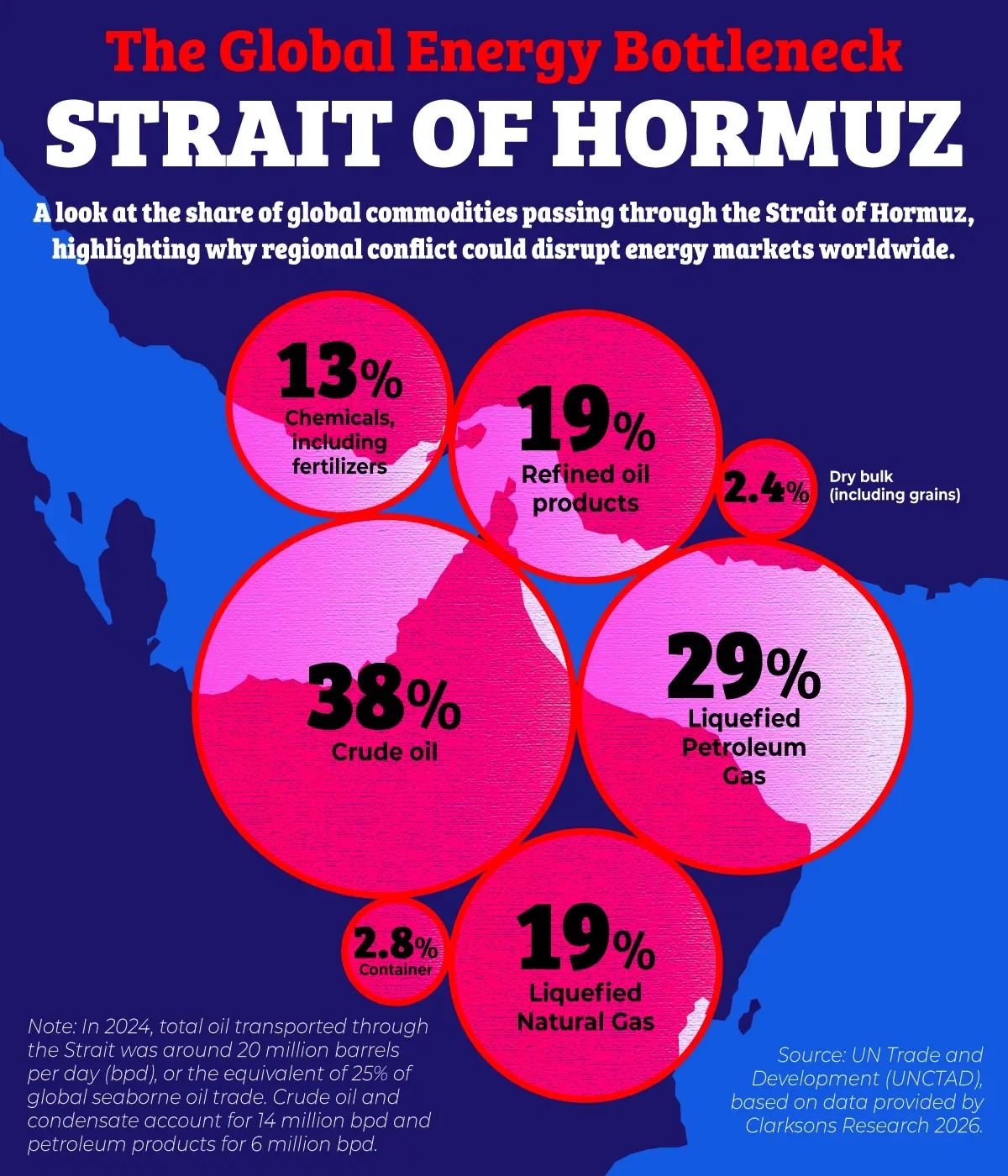
Why the Strait of Hormuz is the global energy bottleneck.

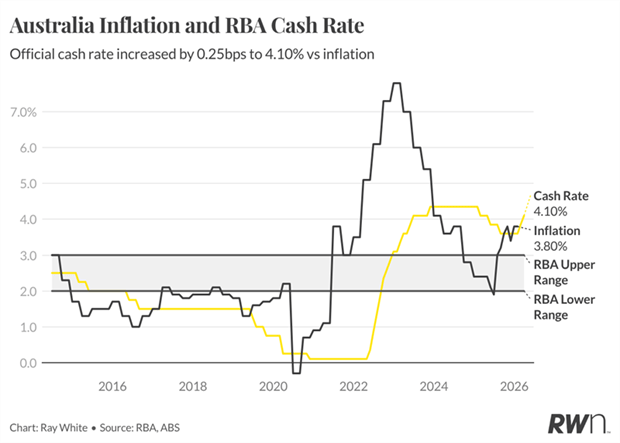
Interest rates rise to crack inflation ... hopefully it’s not a sledgehammer
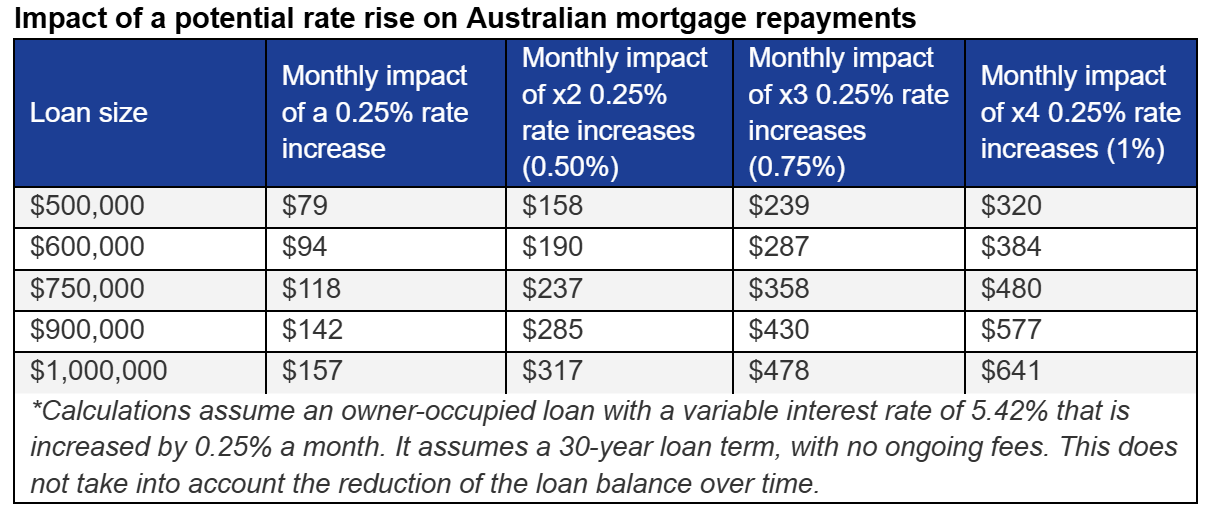
The Reserve Bank did lift interest rates 0.25 per cent this week to 4.1 per cent, adding $94 a month to repayments on a $600,000 home loan. It’s the second consecutive rate rise following the hike at the February board meeting ... and it’s expected there could be a third straight rise at the next RBA board meeting in May.
Add the two consecutive rate rises together and repayments on the average home loan ($694,000–$736,000) will be up around $200 a month … after a third hike, it would be almost $300 a month.
Now add the extra $100 a month ($25 a week on a 60 litre tank) to fill a car since the Middle East crisis started lifting global oil prices, and Australian household budgets are being hit hard. The rise in petrol prices is about the same as a 0.25 per cent increase in interest rates.
The RBA has to be really careful it doesn’t crush household finances and tip the economy over the edge.
Its argument, quite rightly, is that unemployment is low and jobs growth is robust - so people have a job and are earning an income to cope. Plus, property prices are strong, so everyone’s biggest asset is performing well.
I understand their rationale, but it’s a fine line they’re treading. RBA Governor Michele Bullock admitted as much in her press conference, acknowledging that an economic recession is a possibility.
Higher petrol prices feeding into inflation is very different to consumers driving demand. The Iran crisis has nothing to do with consumers but they’re being hit by the double whammy of higher loan repayments and a massive rise in petrol prices.
I don’t wish the possibility of an economic recession on anyone.
Source: Compare the Market

Oil shock and the investment markets
Financial markets and everyday Australians are being bombarded with news of the Middle East crisis and what it means for our lives and investments. There’s just so much to take in and analyse.
I received a great summary from superannuation and trading platform SuperHero (declaration: I’m a customer and investor) on the impact of higher oil prices on investment markets.
How oil prices move the stock market:
Inflation and interest rates
Oil is a core input cost across almost every industry. When crude prices rise, businesses face higher costs for energy, transport and raw materials. Those costs get passed on to consumers, pushing up the price of everything from groceries to airline tickets.Higher inflation puts pressure on central banks to keep interest rates elevated for longer. That matters for equities because higher rates increase the “discount rate” used to value future corporate earnings, which tends to weigh on share prices, particularly for growth stocks.
We’re seeing this play out in real time. With oil prices surging since late February 2026, analysts now expect the US Federal Reserve to delay further rate cuts, keeping borrowing costs higher across the economy.
Corporate profit margins
Not all companies are affected equally. For energy-intensive businesses (airlines, logistics firms, manufacturers and agriculture), a spike in oil prices directly squeezes profit margins. If they can’t pass those costs on to customers, earnings take a hit.On the flip side, oil and gas producers see their revenues climb as the commodity they sell becomes more valuable. The same barrel of oil that cost US$70 a few weeks ago now sells for US$90 or more.
Consumer spending
When fuel prices rise, households have less money to spend on everything else. In the US, retail petrol prices have jumped by more than 50 cents per gallon since the Iran conflict began. In Australia, drivers are already feeling the pinch at the bowser.This diversion of spending away from discretionary goods (dining out, entertainment, retail) and towards essentials (fuel, energy bills) tends to hurt consumer-facing businesses and drag on broader economic growth.
Investor sentiment and volatility
Oil price shocks trigger fear and uncertainty, two things markets hate. Since the Iran war began, we’ve seen dramatic swings across global indices. Japan’s Nikkei 225 recorded its worst single-day fall since April 2025. South Korea’s Kospi dropped 6 per cent and was halted for 20 minutes due to heavy selling. Even in the US, the S&P 500, Dow and Nasdaq have all experienced significant intraday swings driven by conflicting reports about the Strait of Hormuz.When volatility spikes, investors tend to rotate out of riskier assets and into perceived safe havens like bonds, gold or cash, putting further downward pressure on equities.
Sector winners and losers when oil prices spike
The impact of rising oil prices is not uniform across the share market. Some sectors benefit directly, while others bear the brunt.
Winners:
Energy producers: Companies like Exxon Mobil, Chevron, Occidental Petroleum and Diamondback Energy have all rallied since the conflict began. Higher crude prices directly boost their revenues and profit margins. On the ASX, energy names like Woodside, Santos and Beach Energy tend to follow a similar pattern when global oil prices rise.
Defence and aerospace: Geopolitical conflict tends to drive increased government defence spending. Stocks like Northrop Grumman and Lockheed Martin surged in early March 2026.
Losers:
Airlines: Jet fuel is one of the largest costs for any airline. United Airlines, American Airlines and Alaska Air all fell more than 4 per cent in a single session following the initial oil spike. Australian carriers like Qantas are not immune either.
Consumer staples and discretionary: When consumers redirect spending to fuel and energy, companies selling packaged food, snacks and non-essential goods feel the squeeze. In the US, Campbell’s, Conagra and General Mills all dropped between 4 per cent and 7 per cent as the market priced in weaker consumer spending.
Transport and logistics: Higher fuel costs hit trucking, shipping and delivery companies hard. In the US, companies like FedEx and UPS see margins compress as diesel prices climb. On the ASX, logistics operators like Brambles and Qube Holdings are sensitive to fuel cost movements. Any business with a large fleet faces immediate margin pressure.
Companies affected by oil prices and how investors can position
If you’re wondering which specific companies are most exposed to oil price movements, here are some of the key names to know on both sides of the Pacific.
On the ASX
Woodside Energy is Australia’s largest independent oil and gas producer, operating major LNG projects including Pluto and North West Shelf in Western Australia, as well as the Sangomar oil project offshore Senegal. Higher oil and LNG prices flow directly into Woodside’s earnings. The company recorded record production in 2025 and currently offers a dividend yield above 5 per cent. Woodside shares surged nearly 7 per cent in a single session when the Iran conflict began and are up roughly 30 per cent for the year.
Santos is Australia’s second largest oil and gas producer. What makes Santos particularly interesting right now is its timing: the company shipped its first LNG cargo from the long-awaited Barossa gas project in January 2026, and production is expected to rise roughly 30 per cent by 2027 as Barossa and its Pikka project in Alaska ramp up. Rising output plus rising oil prices is a powerful combination for earnings.
Karoon Energy is a smaller, pure-play oil producer focused on offshore Brazil. With a market cap of around A$1.25 billion and a P/E of roughly 7, Karoon is far more sensitive to oil price swings than its larger peers. It surged more than 15 per cent in a single day when the conflict began, but would likely give back gains just as quickly if prices retreat.
On the losing side, ASX-listed airlines like Qantas face immediate margin pressure when jet fuel costs rise. Consumer-facing retailers and logistics companies with large fleet operations are also vulnerable.
How investors may consider positioning for oil price movements
There are several ways investors can position their portfolios around oil price movements, depending on their risk appetite and time horizon.
Direct energy exposure: Buying shares in oil and gas producers gives you direct exposure to rising crude prices. Larger, diversified companies like Exxon, Chevron or Woodside tend to be more resilient across the cycle, while smaller pure-play producers like Karoon offer more upside (and more downside) when prices swing.
Energy ETFs: For investors who want energy exposure without picking individual stocks, exchange-traded funds (ETFs) that track baskets of energy companies can provide diversified access to the sector. In the US, the Energy Select Sector SPDR Fund (XLE) tracks major US oil and gas companies. On the ASX, the S&P/ASX 200 Energy Index (XEJ) covers Australia’s largest energy producers.
Sector rotation: Some investors use oil price trends as a signal to rotate between sectors. When oil is rising, they may increase exposure to energy while reducing holdings in oil-sensitive losers like airlines and consumer discretionary. When oil falls, the rotation reverses. This approach requires active management and a willingness to trade more frequently.
Stay diversified: Perhaps the simplest approach is to ensure your portfolio has some energy exposure as a natural hedge. Holding a mix of sectors may help to diversify a portfolio; for example, energy holdings could potentially offset losses in sectors like airlines or consumer stocks during oil price spikes. The key is not to over-concentrate in any single sector.
One thing worth keeping in mind: war-driven oil rallies tend to unwind just as quickly as they form, because they are built on uncertainty rather than lasting supply destruction. Timing matters and chasing a spike after it has already happened can be risky.

Market crisis is not a time to panic
I know financial markets are a bit scary at the moment, but history tells us it is not a time to panic.
This week I’ve been speaking at member events of Brighter Super and I reckon the most powerful chart from the Brighter investment team is this one:
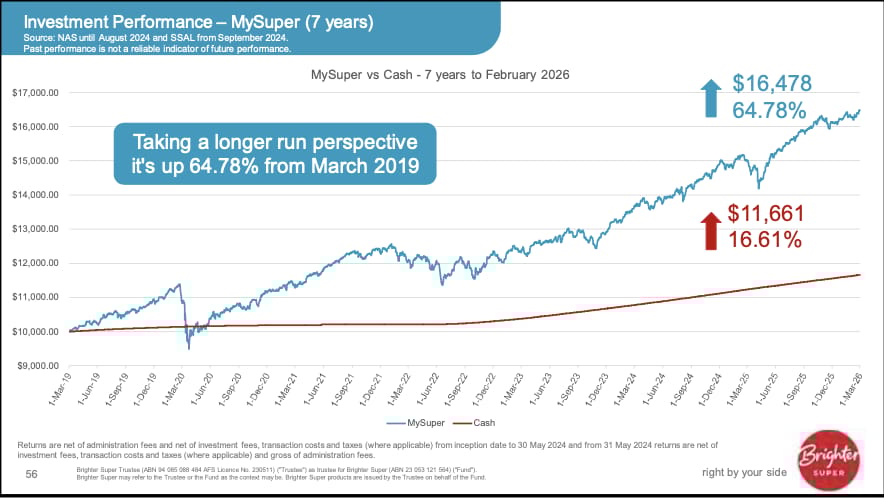
It shows the performance of Brighter’s MySuper default option since 2019 compared with investing in Brighter’s cash investment option. It is a stunning comparison.
Despite setbacks like the market crash during Covid and Trump’s “Liberation Day” tariff impost, investors who have stuck to their strategy rather than panicking and moving to cash have fared far better over the long run.
The difference in returns? A whopping 50 per cent.
Source: Brighter Super
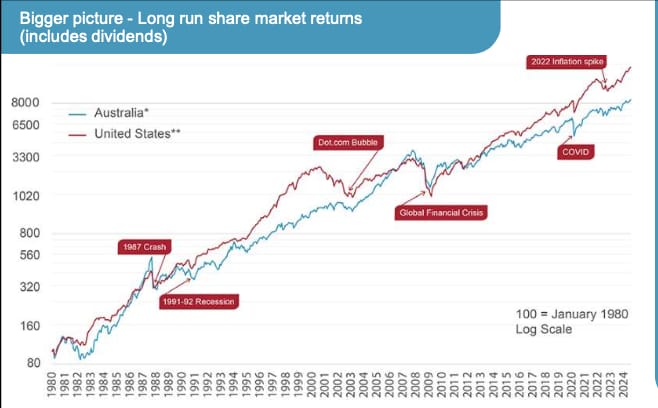
The other chart I found fascinating was the above 44-year performance comparison of the Australian and US sharemarkets.
Both have performed very well for investors over the long term.

Is there price gouging at the petrol pump?
Let me admit right upfront, I am fixated with petrol prices. I have a reasonably long daily commute to my office which takes me past 15-20 petrol stations and on some days the difference prices can be up to 60 cents a litre.
Since the Middle East crisis, Australian petrol prices have risen 17 per cent. We are ranking third globally for fuel increases, even beating the US.
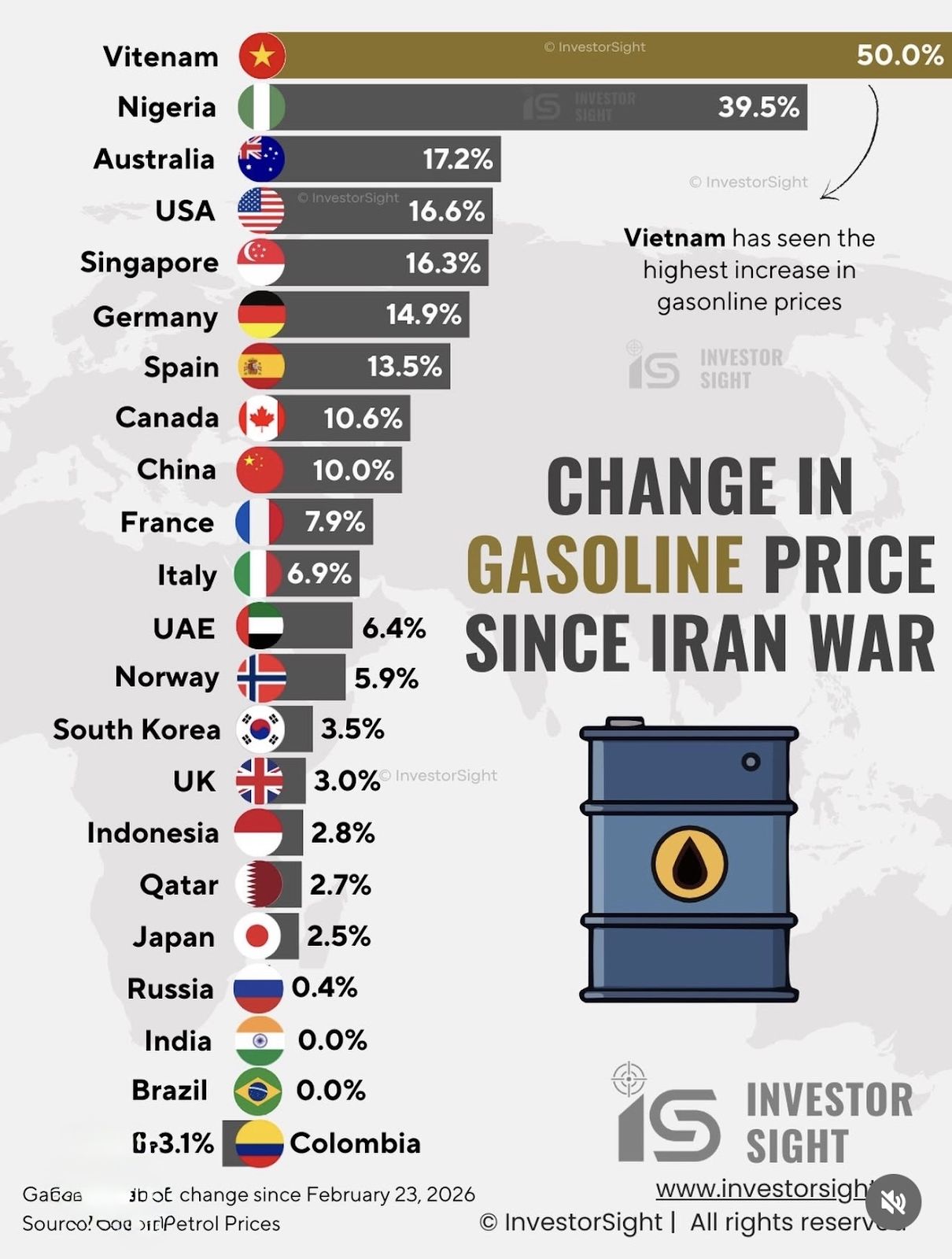
Interestingly, this ranking comes despite us paying a relatively small amount of petrol tax compared with the rest of the world:
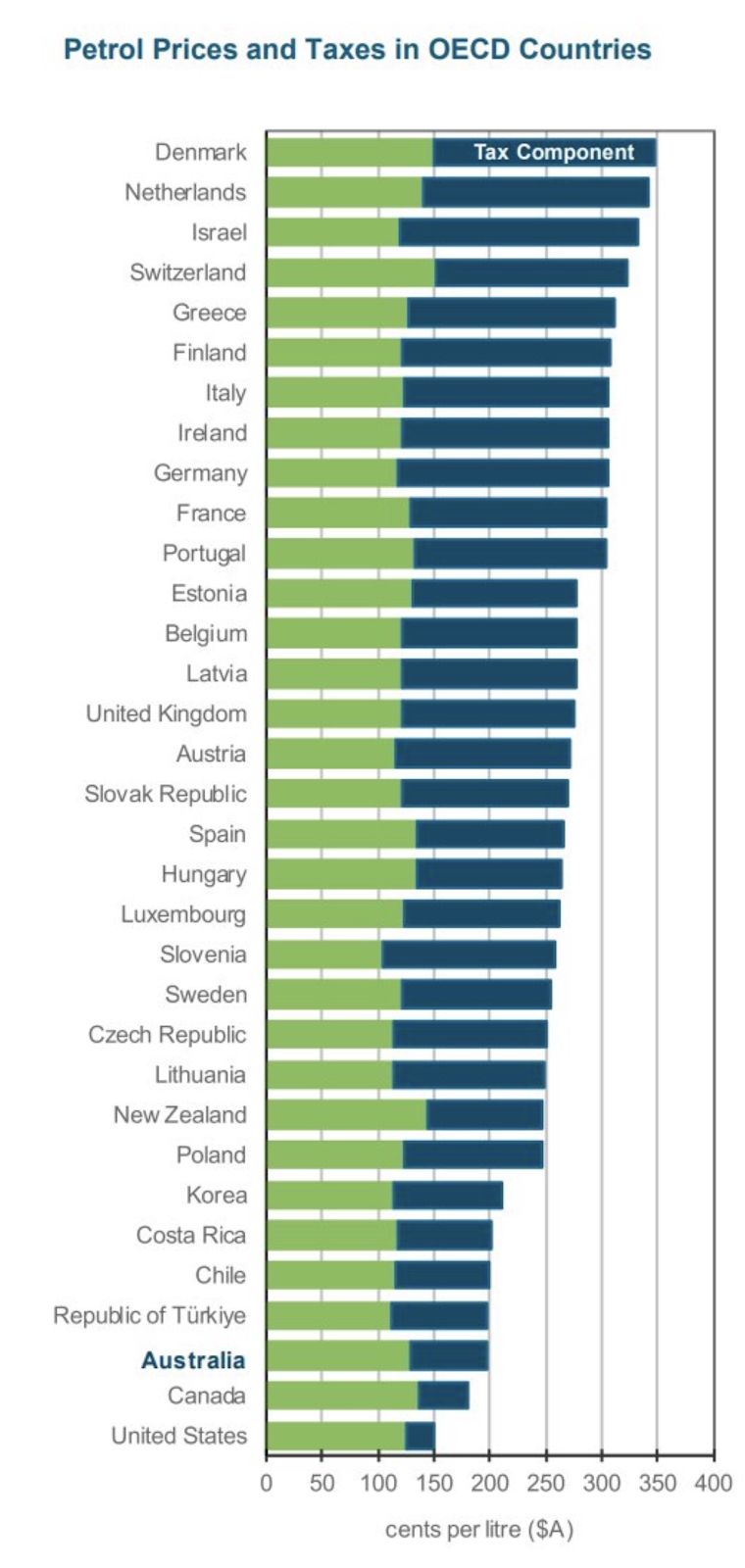
Source: Australian Institute of Petroleum

Where buying a property is better than renting
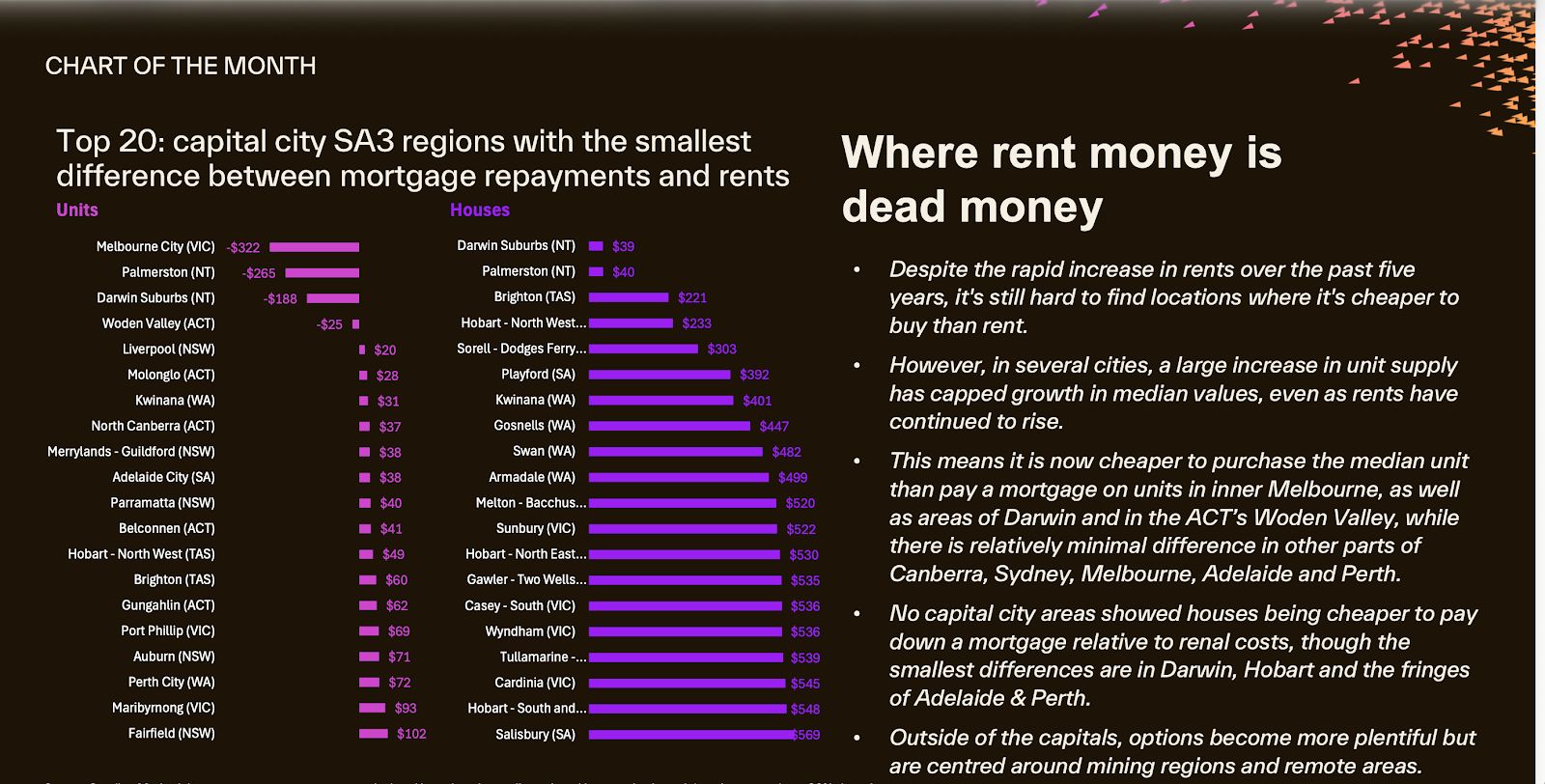
Buying a home for roughly the same cost as renting might sound unlikely in Australia’s current housing market, but new analysis from research group Cotality shows it is still possible in a handful of apartment markets.
Rents have risen rapidly over the past few years and that growth has picked up again, with the national rental index up 5.5 per cent over the past year and vacancy rates around 1.5 per cent.
At the same time, some apartment markets have seen additional supply come online, which has helped keep a lid on value growth even as rents continued to rise. When rents rise faster than property values, the cost gap between renting and buying naturally narrows.
Inner Melbourne is one of the few markets where mortgage repayments on the median unit are estimated to be around $322 per month lower than the equivalent median rent.
Parts of inner-city Darwin and Canberra’s Woden Valley also show a minimal gap exists between median rents and unit mortgage repayments.
But most markets still favour renting once the broader costs of ownership are considered and detached housing remains significantly more expensive to purchase than rent across all capital city regions.
The financial downside to renting is that renters don’t see the wealth benefits most homeowners experience, especially over the past five years where Australian home values have surged almost 44 per cent higher, adding approximately $280,000 to the median dwelling value.
Source: Cotality

What paying kids for chores really teaches them
To this day, I’m asked what I think about paying kids for doing household chores. Pocket money is one of those topics that can spark surprisingly strong opinions among parents... sometimes even between partners.
So here’s my stance:
When our kids were little, Libby and I would pay them for chores that went above and beyond their normal responsibilities around the house and would save us time.
Cleaning up after themselves and making their beds? That was simply part of being in our family... an expectation, not a paid job. But if they offered to wash and vacuum the car, fold the washing or help out with a big yard project, we’d slip a few gold coins into their piggy bank. By the time they were teenagers, their shifts at Maccas helped those piggy bank savings grow a whole lot faster.
Some parents pay pocket money without any domestic expectation (personally I believe money must be earned). They see it as teaching stewardship. But then others feel paying their kids to contribute to the household isn’t sharing the load... worse, it might even raise entitled adults. And then there are many of us who sit somewhere in the middle. We wanted our kids to be responsible, hard-working and financially literate, without turning the family home into a miniature workplace.
So let’s explore what pocket money can teach children, and then I’ll leave it to you to decide what works best for your family.
The case for paying kids for chores
There are lots of great financial lessons that can come from earning and handling money at a young age.
Put in the effort and be rewarded. Paying your kids to do certain tasks can help them understand that money doesn’t simply exist on a magic plastic card, or in your phone when you tap to pay. It’s earned. That connection is powerful, especially as they get older and begin to understand that effort carries value. Why is cleaning the windows worth more than weeding? Why does one job take longer? That sort of thing. These chats are the foundation for understanding wages, time and skill.
Money needs to be managed. If we want our kids to become confident adults with money, they need hands-on experience managing it. That means adding up, saving for a goal and budgeting. A small, regular income - whether tied to chores or not - allows them to practice this. And mistakes made with $5 are far less painful than mistakes made with $5,000. Starting financial literacy young is a lifelong gift.
Showing initiative and a drive to earn can pay off. When kids know there are optional “extra” jobs available where they can boost their savings, they can catch what I call the “earning bug” - that drive to increase their income in various ways. So when kids ask, “What else can I do?” it’s a lovely shift from being told what to do. You’re seeing an entrepreneurial mindset rather than passive dependence.
But we can’t overlook the downsides.
The case against paying kids for chores:
On the other side of the pocket money fence are those who believe kids shouldn’t be paid for contributing to the running of the household. They argue:
Family contribution shouldn’t be transactional. A home isn’t a business, it’s a shared responsibility. Paying children for everyday tasks can send the message that helping the family requires compensation. Mum or Dad are not getting paid to cook dinner or clean the bathroom, so why should they?
It can reduce intrinsic motivation. Research in behavioural psychology suggests that when we attach payment to tasks that children might otherwise do willingly, or because they’re expected to, we risk shifting their motivation. Instead of helping because it’s the right thing to do, they may begin asking, “How much will I get?”
It creates negotiation fatigue. If every job has a price tag, you may find yourself in constant micro-negotiations. “I’ll do it for $3.” “No, $2.” That dynamic can become exhausting and eroding to family relationships.
It can feel divisive or unfair. Not all families have the disposable income to dish out pocket money. Even if that’s not your family, you might be aware that kids your child is mates with are from families who are struggling financially. Pocket money can feel unfair when not all kids can earn it, or earn it equally.
A middle-ground approach
Many families, like ours back in the day, tend to land somewhere in between: These jobs are your responsibilities, these ones can earn you pocket money etc
But.we also had a savings ‘rule’ in the Koch family: Save 50 per cent, spend 40 per cent (if you want) and give 10 per cent to charity.
Libby and I wanted to teach our kids not only how to handle their money but that it means something beyond them.
Harvard University in the US has been conducting a 75-year study on humans and one of the criteria is finding out what makes people successful in life... and one of the most powerful reasons is kids doing chores.
Researchers found that doing household chores early in childhood predicted adult professional success better than school grades, test scores, or attending prestigious schools.
Children that developed a pitch-in mindset, asking how I can be useful instead of waiting to be told what to do, built habits that shaped their entire careers.
The research showed that rolling up your sleeves and contributing to family life builds competence that report cards cannot measure.
Start early. Be consistent. The simplest daily tasks create the strongest foundations.
More than money
Ultimately, the real question isn’t “Should I pay my kids for household chores?” It’s “What kind of adults am I trying to raise?”
Money management is learned. So is responsibility. So is generosity.
Whether you tie pocket money to chores or not, what matters most are the values and lessons behind your choice.

Why the Strait of Hormuz is so important for global energy supply: