- Your Money & Your Life
- Posts
- My tip for a shaky market + Rate rise hits property
My tip for a shaky market + Rate rise hits property
My Money Digest - 10 April 2026

David Koch
April 10, 2026

Hi everyone,
I hope you had a great Easter break and are enjoying the school holidays.
Well, it's been another rollercoaster week as the situation in the Middle East is a minute-by-minute proposition.
In this week’s newsletter
The long term reality of the rolling financial crises.
Interest rates are taking their toll on property values.
Why you need to plug this financial leak.
Thinking practically about life insurance: When to reassess.

What crisis? The best strategy has always been to hang in there
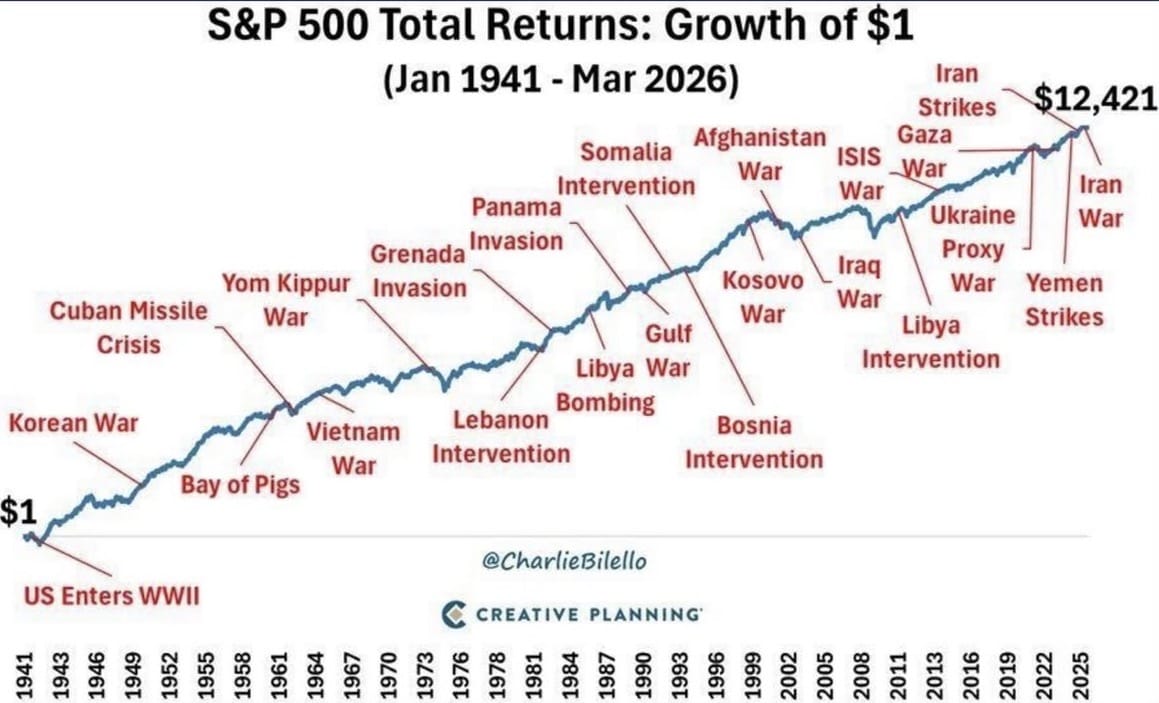
Amid all the political chaos and financial implication of the war with Iran, let's keep some perspective.
I know it’s hard to comprehend when you look back on our lives and it seems like it has been full of these types of rolling crises.
But step back and put it in perspective. Since 1941, when the US entered WWII, $1 invested in the S&P 500 would be worth about $12,421 today - and that’s despite all the global crises that have unfolded along the way.
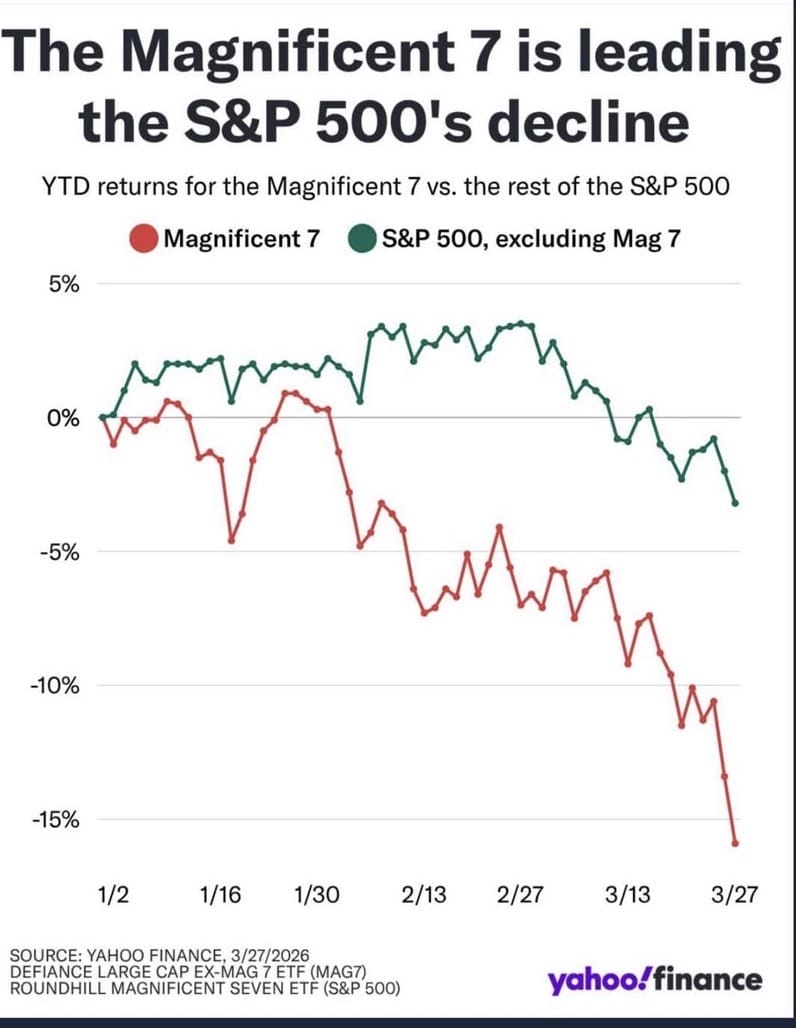
To bring it to more current trends, you’ll remember that last year I often wrote about the Magnificent 7 US technology stocks driving the boom in the US share market. You’ll also remember how often I talk about investments moving in cycles - up and down.
So, guess what? While technology stocks drove the market higher last year, this year the Magnificent 7 is dragging the market down.
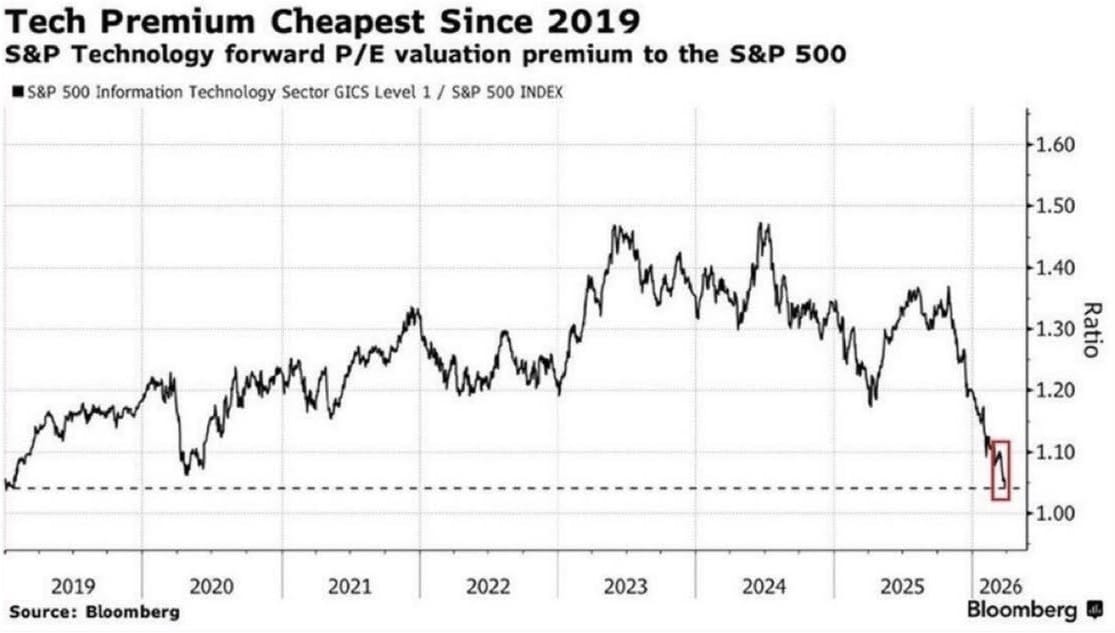
Technology stocks are now at their cheapest valuations since 2019. Ironically, the rapid rise of AI is starting to undermine confidence in some tech companies, as their business models are under threat from the very technology they helped create.


Interest rates and the housing market
Interest rate hikes continue to have an impact on property prices, particularly in Sydney and Melbourne.
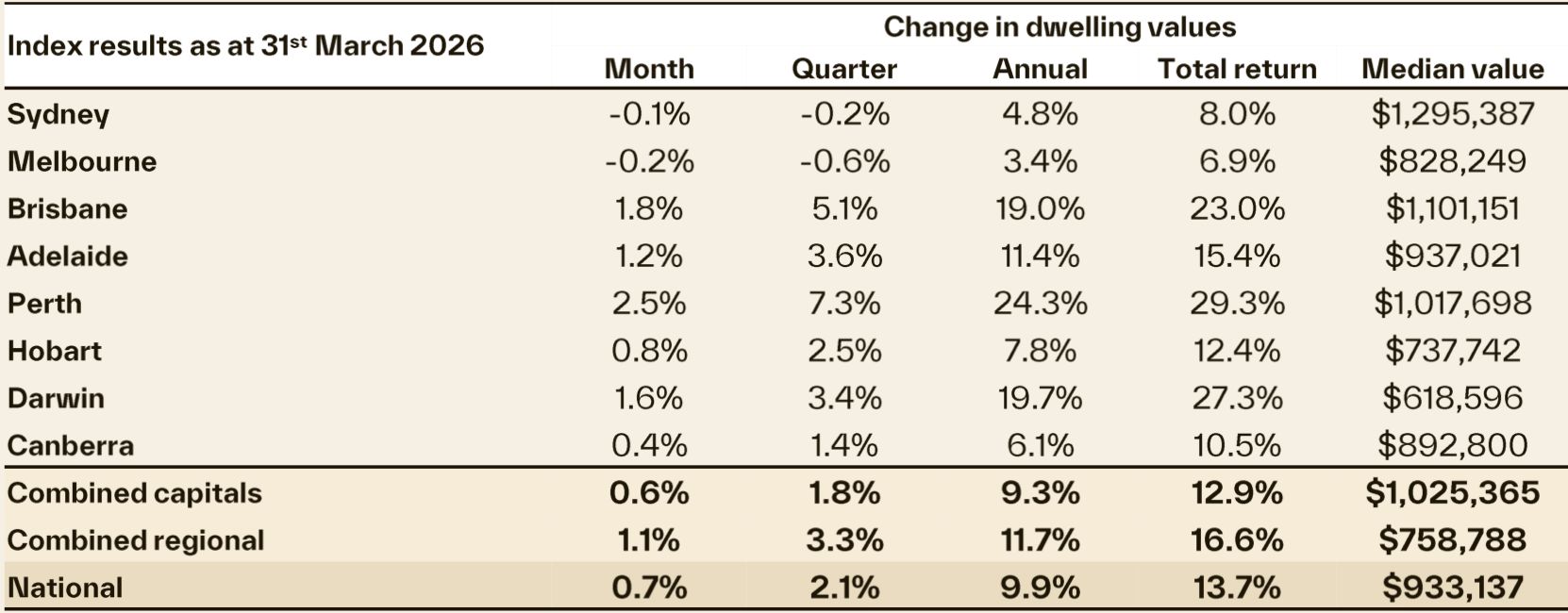
Cotality’s national home value index rose 0.7 per cent in March, which means dwelling values were 2.1 per cent higher over the first quarter of the year. But the pace of the gains is easing... down from a 2.8 per cent increase in the December quarter last year.
And we’re seeing more of a two-speed housing market.
The mid-sized capitals, as well as Darwin, are all recording growth of 1.2 per cent or more on a month-to-month basis, while Sydney and Melbourne continue their downward trend which started at the end of last year.
Since the end of November, Melbourne values have fallen by -0.9 per cent and the Sydney market is down -0.4 per cent. Auction clearance rates have fallen and more properties have come on to the market which means buyers have more choice and are able to negotiate on price.
At the other end of the spectrum, the trend in Perth is accelerating again, with home values up 2.5 per cent in March and 7.3 per cent higher over the quarter.
Across all capitals, lower-value properties are making the strongest gains. For example, in Sydney, upper-quartile dwelling values fell 1.8 per cent over the March quarter, while lower-quartile values rose by 1.8 per cent.
Higher mortgage repayments are deflecting buyer demand towards the lower end of the market, competing with a pickup in first home buyers taking advantage of stimulus and higher levels of investor activity.
Regional markets are showing some resilience to the slowdown, with values rising 1.1 per cent over the month and 3.3 per cent over the quarter.
Source: Cotality


Have you plugged this financial leak?
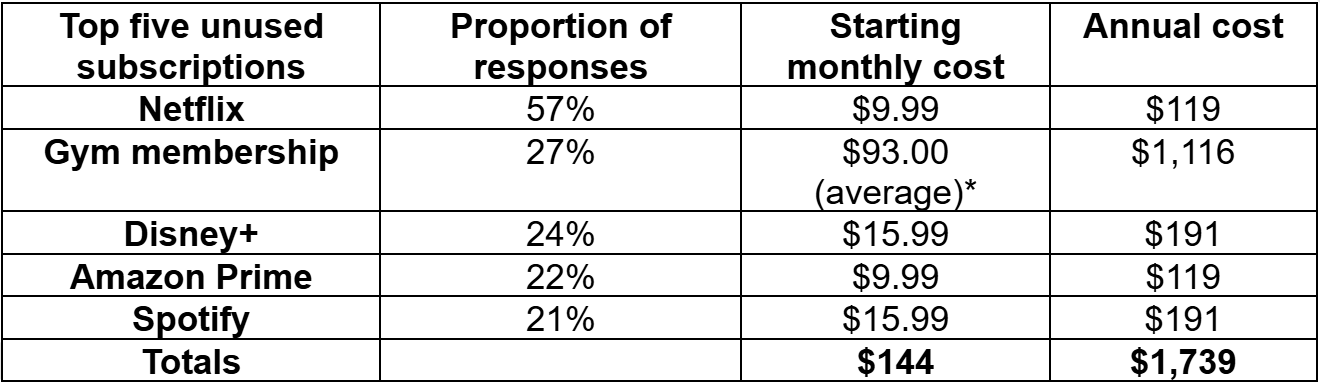
Around 50 per cent of Australians admit to paying for unused subscriptions, with Compare the Market data revealing consumers could be wasting more than $1,700 annually on streaming services and gym memberships.
Of the Australians who were unnecessarily paying for subscriptions, almost six in 10 pointed to their Netflix subscription. This equates to a loss of at least $119 per year.
However, it was unused gym memberships that were burning the biggest financial hole. Those surveyed who were not actively using their gym pass were spending around $93 per month on average, resulting in a cost of $1,116 per year.
Based on the top five reported unused subscriptions and their base monthly plans, Compare the Market uncovered Australians could be wasting up to $1,739 per year.
Source: Compare the Market
Other reported unused subscriptions included Stan, Amazon Prime Video, and Paramount+.
With record high fuel prices, the rising cash rate, and mounting supermarket costs, it feels like Australians are being hit at every cost-of-living corner again.
But with around half of those surveyed admitting they’re still paying for unused subscriptions, it’s a reminder to scrutinise our expenses.
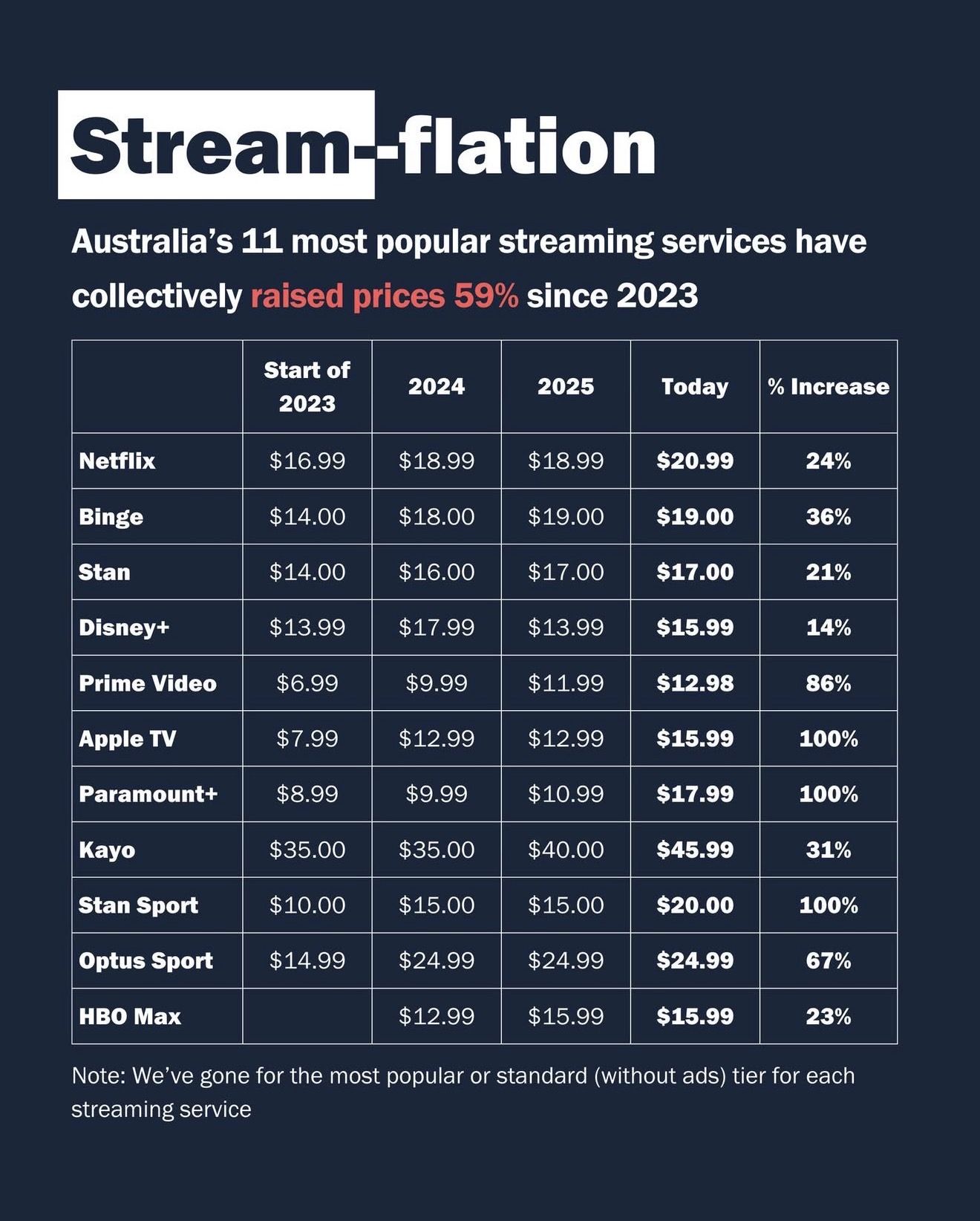
This is especially so as streaming platforms have been mercilessly increasing their charges over recent years. I’ve shared this table by Equity Mates before - it shows just how dramatic these increases have been:
Source: Equity Mates
It really has been extortionate.
So if you don’t regularly go into the gym anymore or haven’t logged into Netflix in a while, it’s worth cutting ties.
It’s usually easy to cancel a subscription and may take a few minutes, but it could save you hundreds down the drain every year in total.
Don’t set-and-forget on your other household bills either. For example, the Compare the Market experts often find that people pay for private health insurance inclusions they don’t need anymore, such as pregnancy cover, so it’s worth reviewing all your bills.
This is an easy cost-of-living win amid an uncertain economic period.

Paying too much for peace of mind? Thinking practically about life insurance
No one wants to leave their family exposed if something terrible happens. And it’s a good thing they don’t. I’m a big believer in protecting your loved ones financially. They are the most valuable thing in your life.
But here’s the reality: as we get older, life insurance premiums rise, sometimes steeply, and what once felt affordable can start to feel like a serious monthly drain. At the same time, our lives and finances can look very different than when we first took out a policy.
So, at what point do we ask ourselves: Does the life protection I have still make sense today?
I spoke with Life and Income Protection Manager, Mitchell Bass at Compare the Market, where I am Economic Director, about when it might be time to review your cover.
An important safety net
“Life insurance can be a morbid topic, and no one really wants to think about it,” Mitchell tells me.
“But it is there to take care of your loved ones when you pass away or become terminally ill.”
Indeed it is. I have seen firsthand just how much that lump-sum payment can be a lifeline when friends who have lost their life partners. It helps to cover funeral costs, debts, mortgages or everyday living expenses, and eases the financial burden during an already devastating time.
Likewise, adding income protection to your policy can provide ongoing monetary support if you become seriously ill or disabled.
It’s a financial umbrella if the worst were to happen.
Yet, many Australians may not be covered in the way they think ... or need. And sometimes, that umbrella has a few holes in it.
Relying on super
According to Mitchell, underinsurance is a real issue with the vast majority of Aussies relying on the default coverage included in their superannuation.
“Which is insufficient for the majority of people,” he says.
What’s more, Mitchell tells me of those who have taken out their own policy, almost a quarter believe they are ‘underinsured’.
The reason is both the problem and the solution:
“They have not reviewed and adjusted their cover as their life changes,” he explains.
A life insurance health check
While we might get life insurance cover at one stage of life, we tend to forget to revisit it.
But we shouldn’t.
Life cover is not a ‘set and forget’ financial product. It needs to be reviewed from time to time to make sure it still fits your life.
“A lot can change in our lives. Things like moving house, a career pivot, or a new addition to the family could leave you either over- or under-insured,” says Mitchell.
“It's worth reviewing your cover periodically to make sure it still aligns with your current situation,” he says.
How much you pay for it has certainly ‘aligned’, so you need to make sure everything else does too.
Why premiums increase
As we age we pay more for life insurance. That’s just a fact.
“Life insurance is risk-rated, which means the higher your risk profile at the point your policy is taken out, the more expensive your premiums will be,” Mitchell says.
In other words, as we get older, risk increases and so can costs, exclusions, and complexity.
“Younger people typically have lower initial premiums because they statistically present lower risk, and they're also more likely to qualify for comprehensive cover with fewer exclusions due to having fewer pre-existing health conditions,” he says.
But it’s not just your health that shifts over time. Our finances do too.
The money picture
As we get older, we get a clearer view of our finances.
“People's insurance needs can change as their financial circumstances evolve - whether that's paying down debt, accumulating savings, or experiencing other life changes,” explains Mitchell.
“Some people find their need for cover reduces over time, while others maintain - or even increase - coverage for various personal reasons,” he says.
But like all things related to life and money, these are highly individual. One person’s financial picture, their dependents' needs, superannuation nest egg, investments and their long-term goals will look very different to another’s.
Future proofing
As for how much cover you need now and in the future, that’s up to you and has to factor lots of personal considerations. But if you need help figuring it out, Mitchell recommends grabbing a pen and paper.
“List out everything you contribute financially... your income, but also things like unpaid care work or household management that could have real costs if someone else had to do them; this will give you a really clear picture of what your loved ones will need,” he says.
And he has this great analogy:
“It is almost like negotiating a salary. Ask yourself: 'will this amount mean my family can live the lifestyle I want them to?'”
You can also use digital tools, like life insurance calculators, and speak with your financial adviser to help you crunch the numbers.
Balancing emotion with practicality
At the end of the day, life insurance should provide peace of mind... not become a financial burden. If your circumstances have changed, your cover needs to as well.
Taking a step back and honestly assessing your true financial responsibilities can help give clarity and maybe, lead you to buying a better umbrella with a new provider.
